WordPress powers over 43% of the web, which means your site is competing in a crowded field. Building a website is only the first step — without a structured approach to search engine optimisation, even well-designed sites can remain invisible in search results.
This WordPress SEO checklist for 2026 covers everything you need to optimise your site properly — from technical foundations and keyword strategy through to content, link building, and the AI-era changes that are reshaping how search works.
WordPress SEO Checklist for 2026
SEO Basics Checklist
Before any advanced tactics, these fundamentals need to be in place. They form the foundation everything else builds on.
Secure Website (HTTPS)
- Install an SSL certificate and ensure your entire site serves over HTTPS — not just checkout or login pages.
- Set up a 301 redirect from HTTP to HTTPS to avoid duplicate content and preserve link equity.
- Keep WordPress core, themes, and plugins updated to patch security vulnerabilities promptly.
- Use strong, unique passwords for all admin accounts and enable two-factor authentication.
Website Speed and Core Web Vitals
Google’s Core Web Vitals are a direct ranking factor. The three metrics to monitor and optimise are:
- LCP (Largest Contentful Paint) — how quickly your main content loads. Target under 2.5 seconds.
- INP (Interaction to Next Paint) — how quickly your page responds to user interactions. Replaced FID in March 2024. Target under 200ms.
- CLS (Cumulative Layout Shift) — visual stability as the page loads. Target under 0.1.
Practical steps to improve performance:
- Compress and serve images in modern formats (WebP, AVIF).
- Use a caching plugin — WP Rocket is the most effective all-in-one option.
- Minify CSS and JavaScript; defer non-critical scripts.
- Choose a hosting provider with fast server response times (TTFB under 200ms).
- Use a CDN (Cloudflare is free and effective) to serve assets from locations closer to your visitors.
Mobile-Friendly Website
- Use a responsive theme that adapts correctly across all screen sizes.
- Test with Google’s Mobile-Friendly Test and resolve any flagged issues.
- Optimise typography and tap target sizes for comfortable mobile use.
- Note: AMP (Accelerated Mobile Pages) is no longer a ranking signal and is generally not recommended for most WordPress sites in 2026. Focus on Core Web Vitals instead.
URLs and Permalinks
- Use SEO-friendly permalinks — the Post Name structure (/your-post-title/) is recommended for most sites.
- Keep URLs short, descriptive, and keyword-relevant.
- Avoid stop words, dates, and special characters in URLs.
- If you change an existing URL, always set up a 301 redirect from the old address.

WordPress SEO Checklist: Basics
Keyword Research Checklist
Keyword research tells you what your audience is actually searching for — and how competitive those searches are. Done well, it shapes your entire content strategy.
Understand Search Intent First
- Every keyword has an intent: informational (how to), navigational (brand name), commercial (best X), or transactional (buy X). Match your content format to the intent.
- Look at what Google is already ranking on page one for your target keyword — that tells you the format Google thinks best satisfies the query.
Long-Tail and Semantic Keywords
- Long-tail keywords are more specific, lower-competition phrases that often convert better than broad head terms.
- Use semantically related terms throughout your content — Google’s understanding of topics goes well beyond exact keyword matching. Include synonyms, related questions, and entity mentions naturally.
- Use keyword research tools like Ahrefs, Semrush, or the free Google Search Console to identify opportunities.
Keyword Placement
- Include your primary keyword in the page title (H1), first paragraph, at least one subheading, meta title, meta description, and the URL.
- Write naturally — keyword stuffing actively harms rankings. Google’s algorithms are sophisticated enough to understand topical relevance without keyword repetition.
WordPress SEO Checklist: Keyword Research
On-Page SEO Checklist
On-page SEO covers the elements within each page that you control directly.
High-Quality Content
- Create content that genuinely satisfies the search intent behind your target keyword — comprehensive, accurate, and more useful than what’s currently ranking.
- Demonstrate first-hand experience or expertise where relevant. Google’s E-E-A-T framework (Experience, Expertise, Authoritativeness, Trustworthiness) increasingly influences rankings, particularly for health, finance, and legal topics.
- Use proper formatting: clear H1, logical H2/H3 hierarchy, short paragraphs, bullet points where appropriate.
- Aim for content depth that matches the topic — longer isn’t always better, but thin content rarely ranks for competitive keywords.
Title Tags and Meta Descriptions
- Write a unique, compelling title tag for every page. Keep it under 60 characters / 580px (as measured by Rank Math or Yoast). Include your primary keyword, ideally near the front.
- Write a meta description that summarises the page and encourages clicks. Keep it under 155 characters / 920px. It doesn’t directly affect rankings but strongly influences click-through rate from search results.
Headings and Structure
- Use one H1 per page — this should match or closely reflect the page’s target keyword.
- Use H2s for major sections and H3/H4 for subsections. Think of headings as a table of contents.
- Many heading structures also qualify as featured snippet candidates — write them clearly and answer the implicit question in the heading.
Internal and External Links
- Add internal links from related posts and pages — this distributes PageRank across your site and helps Google understand your content architecture.
- Link to authoritative external sources where relevant. This supports E-E-A-T and provides value to readers.
- Audit for and fix broken links regularly. Broken internal links waste crawl budget; broken external links undermine credibility.
Images and Media
- Compress images before uploading; serve in WebP or AVIF format for best performance.
- Write descriptive alt text for every image — this improves accessibility and provides additional keyword context for search engines.
- Use meaningful file names (e.g. wordpress-seo-checklist.webp rather than IMG_4521.jpg).
- Embed videos from YouTube or Vimeo rather than self-hosting — this avoids the performance penalty of hosting large video files on your server.
WordPress SEO Checklist: On-Page SEO
Technical SEO Checklist
Technical SEO ensures search engines can efficiently crawl, index, and understand your site.
XML Sitemap
- Generate an XML sitemap — Rank Math and Yoast both do this automatically.
- Submit it to Google Search Console and Bing Webmaster Tools.
- Exclude low-value pages (tag archives, author pages, thin pagination) from your sitemap.
Robots.txt
- Review your robots.txt file to ensure you’re not accidentally blocking important pages from being crawled.
- Block crawlers from accessing admin areas, staging environments, and other non-public sections.
Structured Data (Schema Markup)
- Implement schema markup to help search engines understand your content and qualify for rich results (star ratings, FAQ dropdowns, How-To steps, etc.).
- For WooCommerce stores, Product schema is particularly valuable — it enables price, availability, and review data in search results.
- Validate your structured data using Google’s Rich Results Test.
Canonical URLs
- Use canonical tags to specify the preferred version of duplicate or near-duplicate pages.
- Ensure paginated archives, filtered product pages, and tag/category pages are handled correctly to avoid duplicate content issues.
Crawl Budget and Index Management
- Use the noindex tag for pages that provide no search value: thank-you pages, private login pages, filtered archive variations.
- Monitor crawl errors in Google Search Console and resolve 404s and redirect chains promptly.
- Keep your WordPress installation lean — unnecessary plugins add database queries and slow down crawling.

WordPress SEO Checklist: Technical SEO
Content Checklist
Content quality is the single most important factor in long-term SEO performance. Technical and on-page optimisation amplify good content — they can’t substitute for it.
Content Freshness and Topical Authority
- Update existing content regularly — stale information loses rankings over time, especially in fast-moving topics.
- Build topical authority by covering a subject comprehensively across multiple interlinked posts, rather than publishing isolated articles on unrelated topics.
- Use Google Search Console’s Performance report to identify pages with declining impressions — these are candidates for a refresh.
Optimising for AI Overviews and Featured Snippets
In 2026, a growing proportion of search results include AI Overviews (Google’s AI-generated summaries) and featured snippets. Optimising for these requires:
- Structuring content with clear, direct answers to questions — particularly in the first sentence after a heading.
- Using FAQ sections with concise answers — these are frequently pulled into featured snippets and AI Overviews.
- Adding schema markup (FAQ, HowTo, Article) to help Google identify answer-worthy content.
- Building E-E-A-T signals — AI Overviews tend to favour content from established, authoritative sources.
Voice Search and Conversational Queries
- Optimise for voice search by targeting natural, conversational phrasing and question-based queries (who, what, where, when, how).
- Provide concise, direct answers — voice results typically pull from featured snippets.
- Ensure your site loads fast on mobile, where most voice queries originate.
User-Generated Content
- Reviews, comments, and testimonials add fresh content signals and can improve engagement metrics.
- Respond to comments to encourage discussion and signal that your site is actively maintained.
- Moderate user content to prevent low-quality or spammy submissions from harming your site’s quality signals.
WordPress SEO Checklist: Content
Link Building Checklist
Backlinks remain one of Google’s strongest ranking signals. The emphasis in 2026 is firmly on quality and relevance — not volume.
Earning High-Quality Backlinks
- Acquire backlinks from authoritative, topically relevant websites. A single link from a respected industry publication is worth more than dozens of links from unrelated directories.
- Create genuinely link-worthy content: original research, comprehensive guides, useful tools, or data-led pieces that others naturally reference.
- Guest posting on relevant sites remains effective — focus on sites where your target audience actually reads, not sites that exist solely for link exchange.
Anchor Text
- Use descriptive, relevant anchor text for your internal links — this passes topical context as well as link equity.
- A natural backlink profile includes a mix of branded, partial-match, and generic anchors. Over-optimised exact-match anchor text is a Penguin penalty risk.
Digital PR and Social Signals
- Build relationships with journalists, bloggers, and industry commentators in your space. Responding to media requests (HARO, Quoted, ResponseSource) can earn high-authority editorial links.
- Social shares don’t directly affect rankings, but they increase content reach — which indirectly generates backlinks and brand search volume, both of which matter.
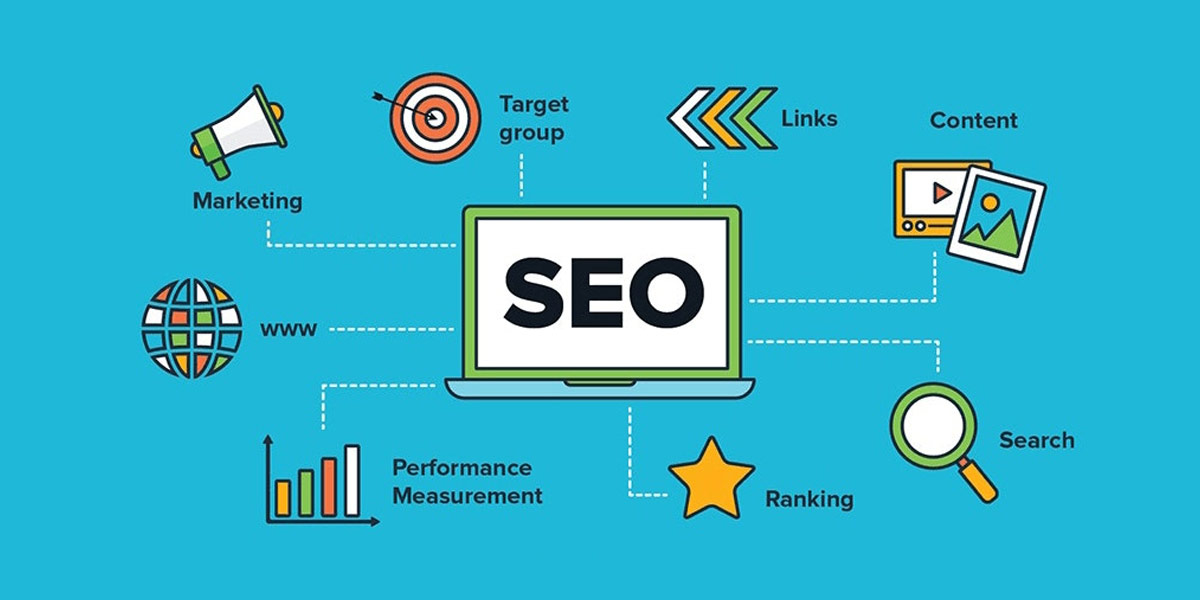
WordPress SEO Checklist: Link Building
Advanced SEO Tips for 2026
Local SEO
- Claim and fully optimise your Google Business Profile (formerly Google My Business) — this is the single most impactful step for local visibility.
- Ensure your NAP (Name, Address, Phone) is consistent across your website, Google Business Profile, and any directory listings.
- Target location-specific keywords and create dedicated landing pages for each service area where relevant.
- Encourage satisfied customers to leave Google reviews — review quantity and recency are significant local ranking factors.
Featured Snippets and AI Overview Optimisation
- Identify informational queries in your niche where a snippet or AI Overview currently appears — these are high-value targets.
- Format your content to directly answer the question: lead with the answer, then provide supporting detail.
- Use tables, numbered lists, and definition-style formats — these are frequently selected for snippet display.
Video SEO
- Upload videos to YouTube with optimised titles, descriptions, and tags. YouTube is the world’s second-largest search engine and videos can rank in both Google Video and standard search results.
- Add transcripts to your video pages — this makes the content indexable and improves accessibility.
- Implement VideoObject schema on pages that embed video to qualify for video rich results.
WordPress SEO: Advanced Tips
Recommended WordPress SEO Plugins
You don’t need multiple SEO plugins — pick one and configure it properly.
- Rank Math — the most feature-complete free option in 2026. Includes schema markup, Core Web Vitals monitoring, keyword tracking, and an SEO analysis tool. The plugin Falling Brick uses and recommends.
- Yoast SEO — the longest-established option, strong for content analysis and readability scoring.
- Google Search Console — not a plugin, but essential. Free, directly from Google, and the most accurate source of data on how your site performs in search.
- Ahrefs / Semrush — paid tools for keyword research, backlink analysis, rank tracking, and site audits. Worth the investment for any site where SEO is a meaningful traffic channel.
WordPress SEO: Tools and Strategy
Conclusion
A well-executed WordPress SEO strategy in 2026 requires attention across multiple layers: a fast, secure, technically sound website; content that genuinely satisfies search intent and demonstrates expertise; and a backlink profile built on relevance rather than volume.
The landscape has shifted with AI Overviews, INP replacing FID in Core Web Vitals, and Google’s increasing emphasis on E-E-A-T. But the fundamentals haven’t changed: build something genuinely useful, make it easy for search engines to find and understand, and earn links from sources that matter.
If you’d like professional support with your SEO strategy, visit i-am-seo.co.uk or explore our SEO consultancy services. For the technical WordPress side of things, our WordPress development services can help ensure your site is built on solid foundations.

WordPress SEO Checklist 2026
FAQs
What is WordPress SEO and why does it matter?
WordPress SEO is the process of optimising your WordPress website to rank higher in search engine results and attract organic (unpaid) traffic. It matters because the majority of web traffic starts with a search query — without SEO, even well-built sites remain largely invisible to potential visitors.
What are the most important SEO factors for WordPress in 2026?
The highest-impact factors currently are: Core Web Vitals performance (especially LCP and INP), content quality and E-E-A-T signals, structured data implementation, mobile usability, and a strong internal linking structure. Backlink quality from relevant, authoritative sites also remains a major ranking signal.
Which WordPress SEO plugin should I use?
Rank Math is the recommended choice in 2026 — it combines comprehensive free features (schema markup, keyword tracking, SEO analysis) with a clean interface. Yoast SEO is a reliable alternative. Use only one SEO plugin at a time.
What is E-E-A-T and how does it affect my WordPress site?
E-E-A-T stands for Experience, Expertise, Authoritativeness, and Trustworthiness — a framework Google’s quality raters use to assess content quality. It influences rankings particularly for topics that affect people’s wellbeing or finances. You can demonstrate E-E-A-T by publishing author bios with credentials, citing sources, keeping content accurate and up to date, and building a genuine online reputation.
What are Core Web Vitals and do they affect WordPress rankings?
Core Web Vitals are three performance metrics: LCP (page load speed), INP (interactivity — replaced FID in March 2024), and CLS (visual stability). They are a confirmed Google ranking signal. Most WordPress sites can improve their scores significantly with a caching plugin, image optimisation, and a fast hosting provider.
How do I optimise WordPress for AI Overviews?
Structure your content with clear, direct answers immediately following question-based headings. Use FAQ sections with concise responses. Implement FAQ and Article schema markup. Build E-E-A-T signals across your site. There is no guaranteed way to appear in AI Overviews, but content that already ranks well for informational queries is most likely to be selected.
How often should I update my WordPress SEO strategy?
Review your technical setup quarterly — check Google Search Console for crawl errors, Core Web Vitals data, and keyword performance. Update individual pieces of content whenever they show declining impressions or when the information becomes outdated. Major algorithm updates (typically several per year from Google) are worth monitoring via industry sources like Search Engine Journal or Google’s own Search Status Dashboard.
What are the best tools for WordPress keyword research?
Google Search Console is the best free starting point — it shows exactly which queries your site already ranks for. For discovering new opportunities, Ahrefs and Semrush are the industry-standard paid tools. Google Keyword Planner (free with a Google Ads account) is useful for volume data. Rank Math Pro includes a keyword research integration for users who want everything in one place.

With over two decades of web design and development expertise, I craft bespoke WordPress solutions at FallingBrick, delivering visually striking, high-performing websites optimised for user experience and SEO.