
Voice search has been part of the SEO conversation for over a decade, but 2026 looks meaningfully different from where we started. The landscape has been reshaped by two parallel forces: the continued growth of smart speakers and voice-enabled devices on one hand, and the rise of AI-powered search — Google’s AI Overviews, ChatGPT search, and Perplexity — on the other. Optimizing for Search Engine Optimization and voice search in 2026 means understanding both, because the strategies overlap more than they diverge.

Introduction
Why Voice Search Optimization Still Matters in 2026
The case for voice search optimization is different in 2026 than it was a few years ago — but it hasn’t gone away. Here’s what’s actually driving it:
Smart speakers and voice assistants are embedded in daily life
Devices like Amazon Echo, Google Home, and Apple HomePod are now fixtures in a significant proportion of UK households. Voice assistants are also deeply integrated into smartphones, cars, TVs, and wearables. The total number of voice-enabled device interactions continues to grow year on year, even if the initial hype around “voice will replace typing” never fully materialised.
AI search has raised the stakes for conversational content
Google’s AI Overviews — which generate a synthesised answer at the top of results — draw heavily from the same signals as voice search: structured, authoritative, conversational content that directly answers specific questions. Optimising for voice search and optimising for AI Overviews are now largely the same exercise. If your content earns a featured snippet or AI Overview citation, it’s also well-positioned for voice results.
Local voice search drives real footfall
“Best [service] near me” and “open now” queries are disproportionately made by voice, particularly on mobile. For any business with a physical presence or local service area, local voice search optimization translates directly into phone calls, visits, and revenue.

Why Voice Search Optimization Matters
How to Optimize Your Website for Voice Search in 2026
1. Target conversational, question-based keywords
Voice queries are longer and more natural than typed searches. Someone typing might search “WordPress speed tips” — the same person asking Alexa might say “what’s the best way to speed up my WordPress site?” Both are worth targeting, but voice-first content should be built around the full conversational phrasing. Use tools like AnswerThePublic, AlsoAsked, or the “People also ask” section of Google results to find the exact question formats your audience uses.
2. Write content that directly answers questions
Voice assistants read answers aloud — which means they need to be concise, self-contained, and structured to be understood out of context. Aim for answers in the 40–60 word range for key questions: a clear, direct sentence followed by a brief supporting explanation. Format each FAQ answer so it could stand alone if read without the question preceding it. This structure also improves your chances of earning a featured snippet, which is the primary source for most voice responses.
3. Optimise for featured snippets and AI Overviews
Featured snippets — the boxed results at position zero in Google — remain the primary source for voice answers. AI Overviews increasingly draw from the same pool of content. To earn these placements: answer the question explicitly in the first sentence of a paragraph, use clear H2/H3 headings framed as questions, keep answers structured and factually precise. Schema markup (structured data) helps search engines identify and surface the right content from your pages.
4. Add and maintain comprehensive schema markup
Structured data tells search engines exactly what your content is about — and it’s one of the clearest signals for voice search eligibility. For most sites, the priority schema types in 2026 are: FAQ schema (for question-and-answer content), LocalBusiness schema (for location-based businesses), HowTo schema (for step-by-step guides), and Article or BlogPosting schema for editorial content. Rank Math and Yoast both generate schema automatically for common post types, but review the output to ensure it’s accurate and complete.
5. Prioritise local SEO
Local voice search is where the commercial impact is most direct. Make sure your Google Business Profile is claimed, complete, and actively maintained — this is the primary data source for “near me” voice results. Ensure your NAP (name, address, phone number) is consistent across your website and all directory listings. Use location-specific keywords naturally in your content, meta tags, and schema. Collect and respond to reviews — these are a trust signal for both local rankings and voice search eligibility.
6. Ensure your site is fully mobile-optimised
The majority of voice searches happen on mobile devices. A site that’s slow, hard to navigate on a small screen, or not properly responsive will underperform in voice search regardless of content quality. Google uses mobile-first indexing — meaning its crawlers assess your site as a mobile user — so mobile performance is a ranking prerequisite, not a nice-to-have.
7. Improve page speed and Core Web Vitals
Speed matters for voice search for the same reason it matters generally: slow sites rank lower, and lower-ranked pages are less likely to be selected as voice answers. Beyond raw load time, Google’s Core Web Vitals — LCP (how fast the main content loads), INP (responsiveness to interaction), and CLS (layout stability) — are ranking signals you need to pass. Use a CDN, compress images to WebP or AVIF format, and minimise render-blocking JavaScript. PageSpeed Insights and WebPageTest will show you exactly where to focus.
8. Use natural, conversational language throughout
Content written in formal, dense, or jargon-heavy language doesn’t translate well to voice. Write the way your audience speaks — clearly, directly, and without unnecessary complexity. This doesn’t mean dumbing down; it means respecting the reader’s time. Short sentences, active voice, and plain English are also better for SEO in general because they improve readability scores and time-on-page.
9. Build out FAQ sections on key pages
FAQ sections are one of the most reliable ways to capture voice search traffic, because they directly mirror how people ask questions aloud. Identify the real questions your customers ask — from enquiry emails, sales calls, search console data, and tools like AlsoAsked — and answer them clearly on the relevant service or product pages. A well-structured FAQ on a service page serves double duty: it addresses objections for human visitors and positions the page for voice and AI search.
Voice assistants and AI search increasingly favour sources that demonstrate consistent expertise across a topic rather than isolated pages that rank for one query. Building a content cluster — a cornerstone article supported by related, more specific pieces — helps establish your site as an authority on a subject. This topical authority approach is more durable than chasing individual keywords, and it aligns with how both Google’s Helpful Content system and AI-powered search evaluate trustworthiness.
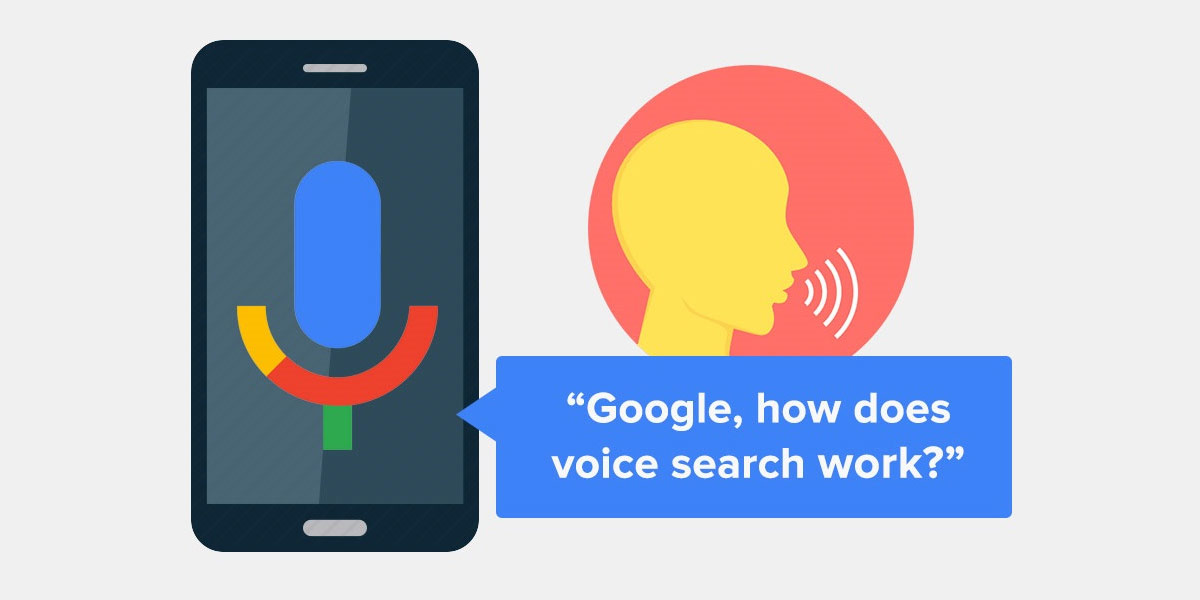
How to Optimize Your Website for Voice Search
Conclusion
Voice search in 2026 is inseparable from AI search more broadly. The content that earns voice results — direct, well-structured, authoritative answers to real questions — is the same content that earns featured snippets, AI Overview citations, and strong organic rankings. Optimising for voice isn’t a separate workstream; it’s what good SEO looks like in 2026. Start with your FAQ sections, your schema markup, and your Google Business Profile, and the voice search benefits follow naturally.
FAQs
What is voice search?
Voice search lets users query a search engine or digital assistant using spoken language rather than typing. Devices like smartphones, smart speakers, and in-car systems all support voice search, and the results are typically delivered as a spoken answer pulled from a featured snippet or local business listing.
How does voice search differ from traditional text-based search?
Voice queries tend to be longer, more conversational, and phrased as complete questions — “what’s a good plumber near me?” rather than “plumber London.” They also have stronger local and immediate intent. This means voice-optimised content needs to mirror natural speech patterns and provide clear, direct answers rather than keyword-dense copy.
How does AI search affect voice search optimization in 2026?
Significantly. Google’s AI Overviews, ChatGPT search, and Perplexity all synthesise answers from web content in a similar way to voice assistants. Content that earns an AI Overview citation — structured, authoritative, conversational — is also well-positioned for voice results. Optimising for both is now effectively the same task.
What schema markup is most important for voice search?
FAQ schema, LocalBusiness schema, and HowTo schema are the highest-priority types for most sites. They give search engines clear signals about the structure and intent of your content, making it easier to surface as a voice answer. Rank Math and other modern SEO plugins generate these automatically for common content types.
How can I check if my site is performing in voice search?
There’s no dedicated voice search report in Google Search Console, but you can use it to track impressions and clicks for question-based queries (queries starting with “what”, “how”, “where”, etc.). Tools like SEMrush and Ahrefs can identify which of your pages are earning featured snippets — a reliable proxy for voice search eligibility. Google Analytics 4 will show whether you’re receiving organic traffic from mobile voice-heavy queries.
Is voice search important for ecommerce?
Yes, particularly for local ecommerce and product discovery. Voice queries like “where can I buy [product] near me” or “what’s the best [product type] under £50” are common purchase-intent searches. Ensuring your product pages have clear, structured descriptions and your Google Business Profile is accurate will help you capture this traffic.
What are the biggest challenges in optimising for voice search?
The main challenges are creating content that answers specific questions concisely without losing depth, ensuring technical SEO fundamentals (schema, page speed, mobile) are solid, and building the topical authority that makes search engines trust your site as a source. It’s less about any single tactic and more about consistent content quality over time.
How does local SEO tie into voice search?
Local voice searches — “near me”, “open now”, “best [service] in [city]” — are among the most commercially valuable queries on any platform. Your Google Business Profile is the primary data source for these results, so keeping it complete and accurate is the single most impactful local voice search action you can take. Consistent NAP data across directories and genuine customer reviews reinforce this further.
What future trends should I watch in voice and AI search?
The distinction between voice search and AI search is continuing to blur — assistants are becoming more conversational, multimodal (handling text, images, and voice together), and personalised. Sites that establish clear topical authority, maintain structured content, and build genuine trust signals (backlinks, reviews, E-E-A-T signals) are best positioned regardless of how the interface evolves.
Do I need a separate voice search strategy?
Not really — good SEO in 2026 already incorporates the key voice search signals. If your content answers real questions clearly, your schema markup is in place, your site is fast and mobile-optimised, and your Google Business Profile is accurate, you’re well-positioned for voice search without needing a separate workstream.

With over two decades of web design and development expertise, I craft bespoke WordPress solutions at FallingBrick, delivering visually striking, high-performing websites optimised for user experience and SEO.