


Elvira
Elvira
Luxury Fashion E-Commerce Website
Overview
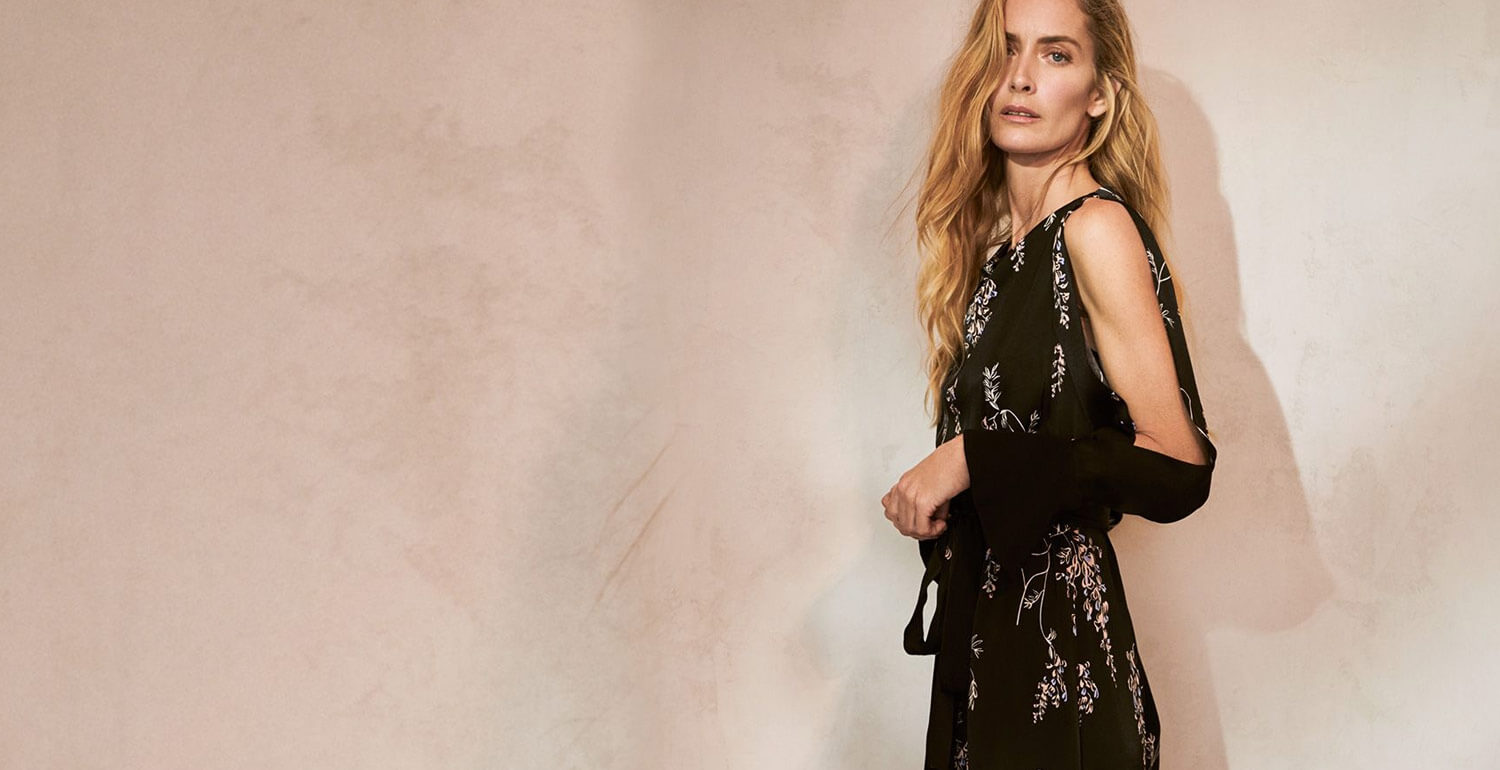
Elvira is a luxury fashion brand with a distinctly editorial sensibility — rich colours, exquisite fabric details, and a commitment to timeless glamour over fast-fashion trend cycles. The website needed to position Elvira firmly in the premium fashion tier, reflecting the quality and craftsmanship of the clothing through every design decision, from typography to image treatment. A Vogue editorial partnership badge visible on the site underlined the brand’s genuine fashion credentials.
The Challenge
Luxury fashion e-commerce is one of the most demanding design briefs in digital. The site needed to feel as considered and refined as the clothing itself — no visual clutter, no compromise on image quality, and a browsing experience that felt closer to a high-end magazine than a conventional online shop.
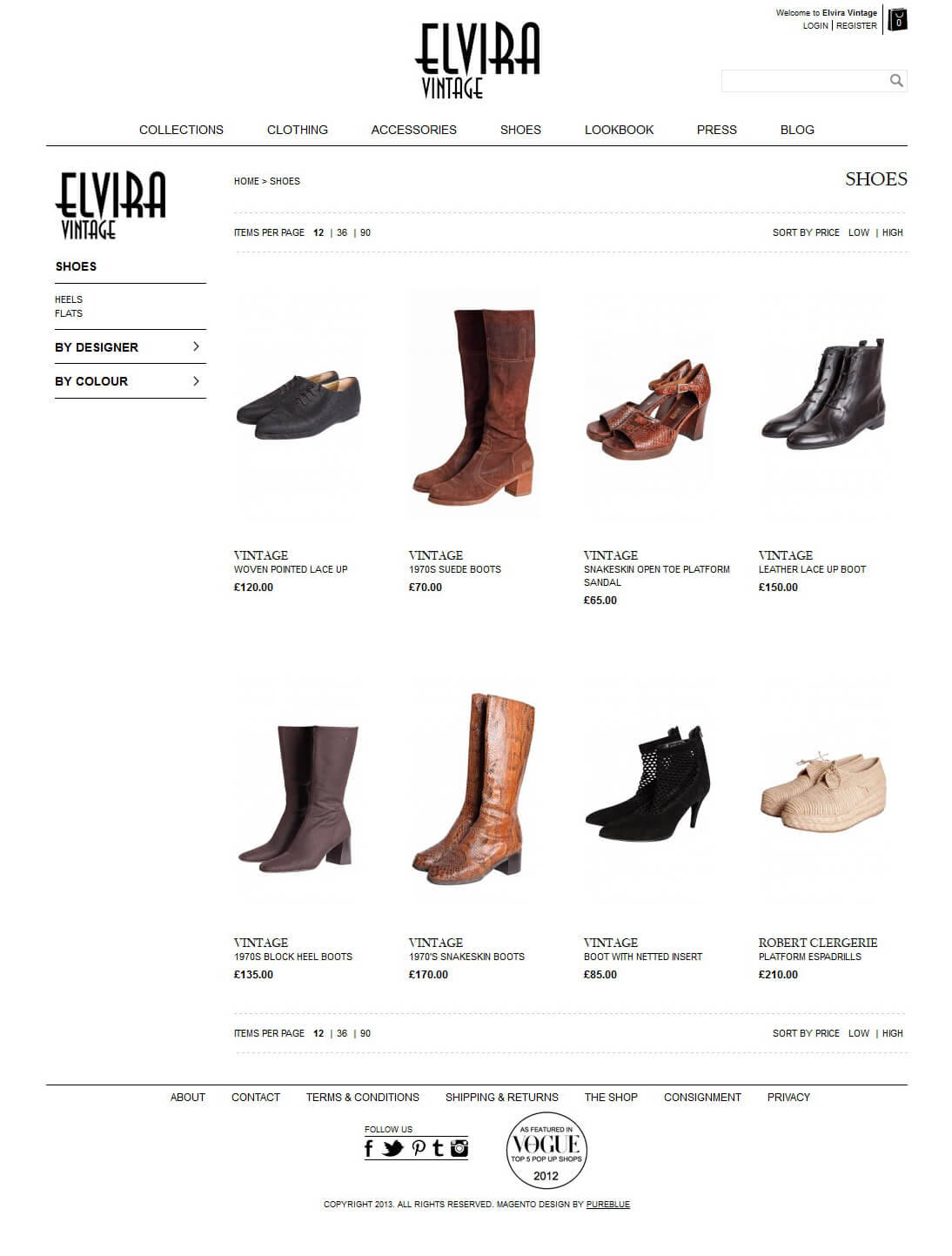
At the same time, it had to function as a genuine transactional platform with product filtering, category navigation including a dedicated Shoes section, and a reliable purchase journey. The risk with luxury fashion sites is always the same: prioritise aesthetics and the commercial function suffers; prioritise commerce and the brand positioning is cheapened.
The Solution
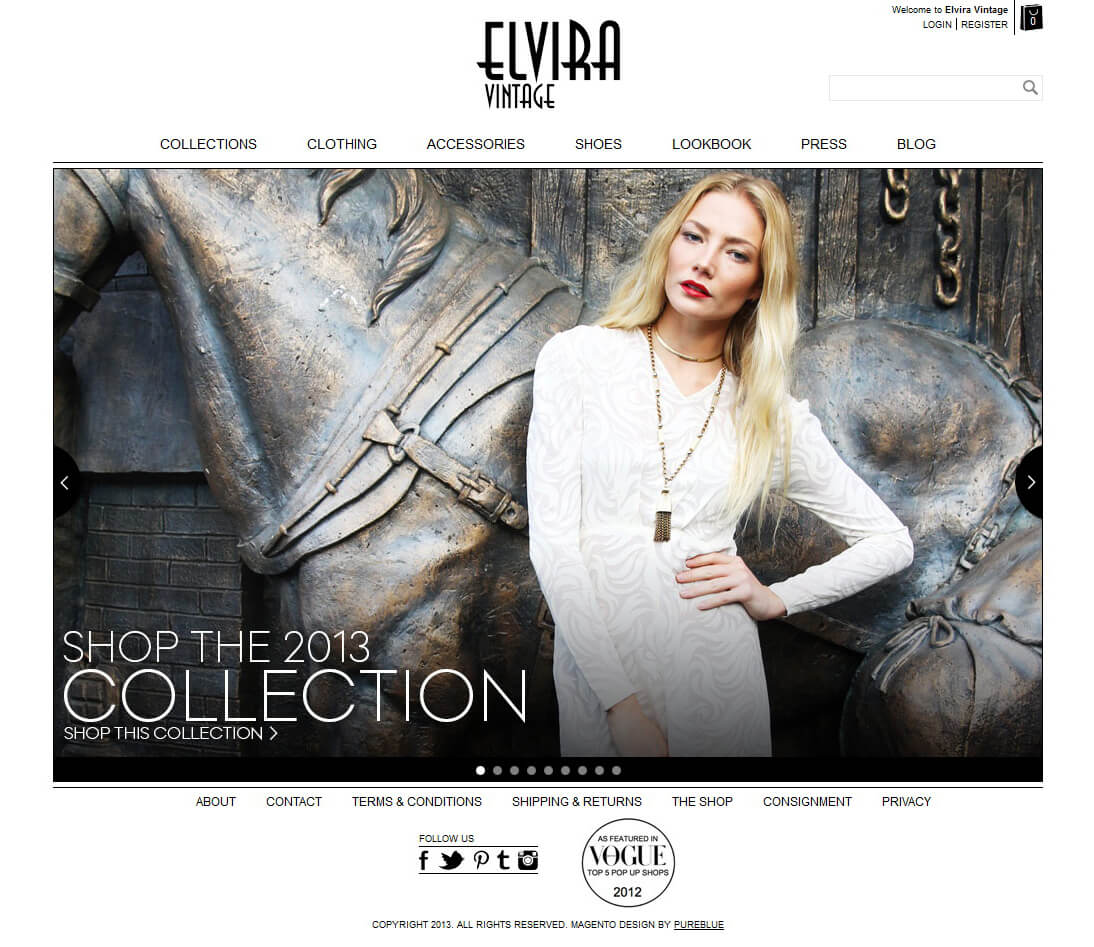
The design was built around an editorial-first philosophy — full-width imagery, generous whitespace, and a restrained typographic palette that let the photography do the heavy lifting. The Elvira logotype was given careful prominence, functioning almost as a masthead in the fashion magazine tradition.
Category pages, including the Shoes section, used a clean grid layout with neutral backgrounds that kept the product photography immaculate and unburdened by interface noise. Product pages were structured around multiple high-resolution image views — essential for a brand where fabric texture and garment detail are key purchase drivers.
The overall architecture supported Collections, Clothing, Accessories, Shoes, a Lookbook, Press coverage, and a Blog — a full editorial and commercial content ecosystem appropriate for a brand with genuine press recognition. Vogue partnership badging was incorporated as a trust signal at key points in the user journey.
Results
- Premium editorial design positioning Elvira confidently in the luxury fashion tier
- Full e-commerce build spanning clothing, shoes, accessories, lookbook, press, and blog
- High-resolution multi-view product pages prioritising fabric detail and garment quality
- Vogue partnership badging integrated as a credibility signal throughout the purchase journey
- Restrained visual language ensuring the photography — not the interface — remains the focus